- English
- Chinese
- French
- German
- Portuguese
- Spanish
- Russian
- Japanese
- Korean
- Arabic
- Irish
- Greek
- Turkish
- Italian
- Danish
- Romanian
- Indonesian
- Czech
- Afrikaans
- Swedish
- Polish
- Basque
- Catalan
- Esperanto
- Hindi
- Lao
- Albanian
- Amharic
- Armenian
- Azerbaijani
- Belarusian
- Bengali
- Bosnian
- Bulgarian
- Cebuano
- Chichewa
- Corsican
- Croatian
- Dutch
- Estonian
- Filipino
- Finnish
- Frisian
- Galician
- Georgian
- Gujarati
- Haitian
- Hausa
- Hawaiian
- Hebrew
- Hmong
- Hungarian
- Icelandic
- Igbo
- Javanese
- Kannada
- Kazakh
- Khmer
- Kurdish
- Kyrgyz
- Latin
- Latvian
- Lithuanian
- Luxembou..
- Macedonian
- Malagasy
- Malay
- Malayalam
- Maltese
- Maori
- Marathi
- Mongolian
- Burmese
- Nepali
- Norwegian
- Pashto
- Persian
- Punjabi
- Serbian
- Sesotho
- Sinhala
- Slovak
- Slovenian
- Somali
- Scots Gaelic
- Shona
- Sindhi
- Sundanese
- Swahili
- Tajik
- Tamil
- Telugu
- Thai
- Ukrainian
- Urdu
- Uzbek
- Vietnamese
- Welsh
- Xhosa
- Yiddish
- Yoruba
- Zulu
- Kinyarwanda
- Tatar
- Oriya
- Turkmen
- Uyghur



Empty Capsule: Tech’s Green Impact?
2026-01-31
When you hear empty capsule, you probably think of the little gel shells for pills. But in the circles I move in—pharma manufacturing, supply chain logistics—that term has started to carry a different weight. There’s a growing buzz about its environmental footprint, or rather, the potential to shrink it. A lot of the conversation, frankly, misses the point. It’s not just about swapping gelatin for vegetarian alternatives like HPMC and calling it a day. The real green impact, if there is one, lies in the messy, unglamorous intersection of material science, manufacturing tech, and brutally practical supply chain decisions. It’s less about a single green product and more about whether the entire system around it can become less wasteful. Let me unpack that.
The Material Misconception and a Factory Floor Reality
Everyone jumps to materials first. Plant-based capsules are marketed as the sustainable hero. And sure, from a sourcing perspective, moving away from animal-derived gelatin has its ethical and supply chain resilience benefits. But green? That’s where it gets fuzzy. The production of hydroxypropyl methylcellulose (HPMC) isn’t exactly a low-energy affair. It involves treating plant cellulose with heavy chemicals. I’ve toured facilities where the water treatment process for the effluent from HPMC production was a bigger, more energy-intensive headache than the gelatin rendering process next door. Calling one green and the other not is a gross oversimplification that marketing departments love, but engineers scratch their heads at.
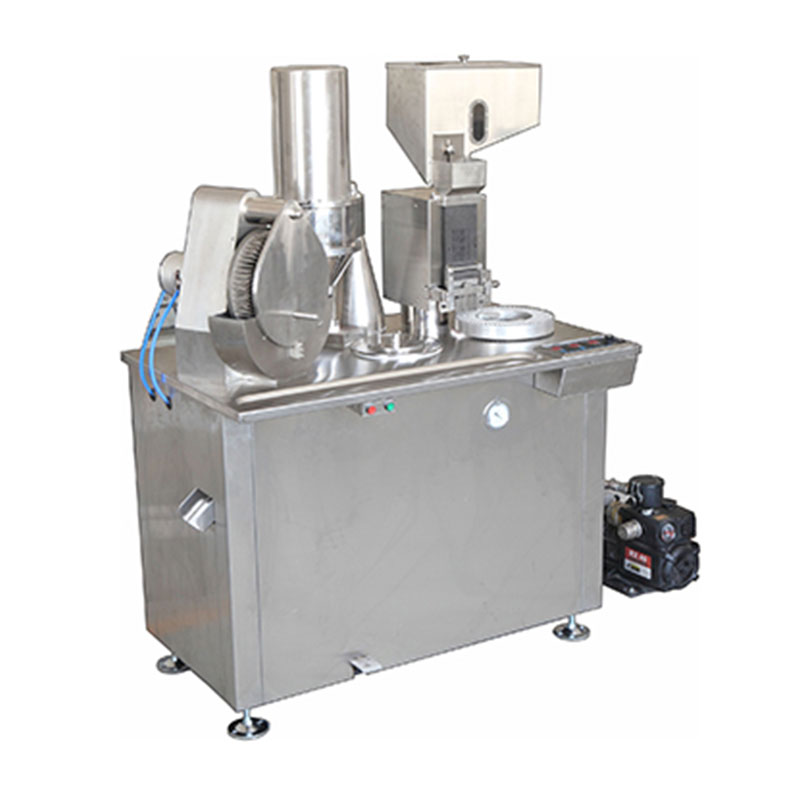
This is where you need to look at the actual manufacturing. I remember a project with a manufacturer, like Suqian Kelaiya, which operates sites in Jiangsu and Zhejiang. They were pushing their empty capsule lines to higher speeds. The goal was efficiency, not sustainability per se. But the effect was a reduction in energy per unit produced. Their newer capsule filling machine models had better thermal regulation for drying, cutting power use by maybe 15%. That’s a tangible green impact born from pure operational tech improvement, not a material switch. It’s these incremental, unsexy engineering wins that often get lost in the broader tech’s green impact narrative.
Then there’s yield. A major source of waste isn’t the capsule material, but the capsules you have to throw away. Imperfect seals, moisture sensitivity causing brittleness, inconsistent dimensions jamming filling lines—every batch has a loss percentage. If your tech, from precision molding to climate-controlled logistics, can push yield from 95% to 97%, you’ve effectively reduced material waste by a significant margin across millions of units. That’s a tech-driven green gain that directly hits the bottom line, which is the only kind that gets real, sustained investment.

Beyond the Capsule: The System’s Hidden Weight
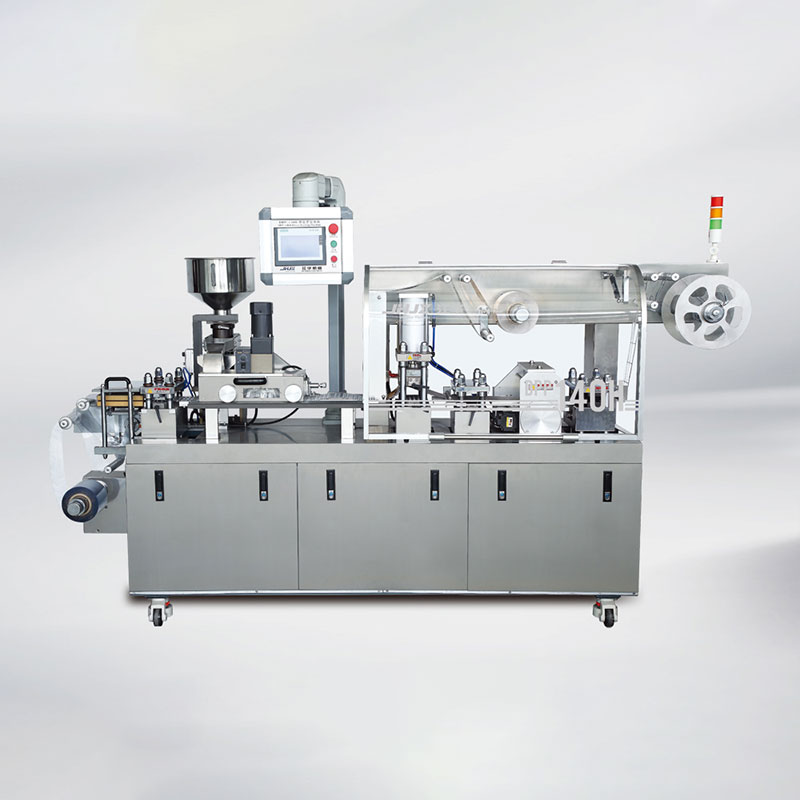
This is the part most lifecycle analyses gloss over: the capsule is a tiny component in a massive system. You make the shell. Then you need to fill it, blister it, box it, ship it. The environmental load of the blister machine and the aluminum/PVC foil often dwarfs that of the capsule itself. I’ve seen companies proudly launch eco-friendly capsules only to pack them in non-recyclable blister packs with excessive secondary packaging. The green impact is negated instantly. The real question for tech is: can it enable systemic efficiency?
We tried something once, a pilot with a mid-sized pharma client. The idea was to integrate data from the empty capsule supplier on capsule dimensions and moisture content directly into the settings of their capsule filling machine and blister machine. The theory was that real-time adjustment would minimize jams and rejects across the whole line. It was a nightmare of compatibility issues—legacy machines, different data protocols. The project eventually fizzled. But the lesson was clear: the biggest green tech potential is in interoperability and data flow, not in isolated component improvements. A perfectly formed capsule is useless if the machine downstream can’t handle it efficiently.
Look at a company’s full scope, like Suqian Kelaiya International Trading Co., Ltd (https://www.kelaiyacorp.com). They’re not just a seller; they’re involved in development, manufacturing, and sales for both capsules and the machines that handle them. That integrated view is crucial. When the same entity understands the specs of the capsule and the mechanics of the filling and blistering machines, there’s a chance to design for systemic efficiency—like tweaking capsule composition for faster sealing on a blister line, reducing heat and energy use. That’s where the green tech impact could be substantive: in the handshake between components.
Logistics: The Invisible Energy Sink
Let’s talk about shipping. Empty capsules are hygroscopic. They suck up moisture. That means from the moment they leave the manufacturing site—say, one of Kelaiya’s plants in Zhejiang—until they’re used in a factory in Europe or America, they often need climate-controlled containers. That’s a massive carbon cost. I’ve had conversations with logistics teams where the GHG emissions from transportation and storage were a bigger concern than the production emissions back at the factory.
Is there a tech answer? Maybe. Research into better moisture barrier coatings that are thinner and biodegradable could allow for standard, non-refrigerated shipping. But that’s a material science play again, and it has to work without compromising dissolution rates in the gut. Another angle is predictive logistics: using AI to optimize shipping routes and warehouse storage times so the capsules are in transit for the shortest possible period. We’re dabbling in this, but the data granularity needed is insane. It’s a slow burn.
The failure point here is often communication. The sustainability team sets a goal for reduced logistics emissions. The procurement team buys capsules based on unit price. The two don’t talk. The tech exists, but the organizational silos prevent its application for a holistic green benefit. So, you end up with the green capsule traveling in a carbon-intensive way, wiping out its benefits.
So, What’s the Verdict on Tech’s Role?
It’s mixed, and it’s incremental. The headline-grabbing breakthroughs in empty capsule tech are rarely the main drivers of green impact. The real work is happening in the grind: more efficient drying ovens, smarter sensors on filling lines to reduce overfills and waste, better predictive maintenance on blister machines to avoid sudden stops and scrapped batches. It’s engineering, not revolution.
Tech’s green impact is less about creating a magical new product and more about enabling transparency and optimization across a complex chain. Can blockchain track the exact environmental cost of a batch from raw material to pharmacy shelf? Possibly. Can IoT sensors on packaging ensure optimal storage conditions throughout the journey, preventing spoilage? Hopefully. But these are tools. Their impact depends entirely on whether companies are willing to look beyond the capsule itself and tackle the system’s inertia.
In the end, asking if the empty capsule has a green tech impact is the wrong question. The right question is: can the ecosystem of making, filling, packing, and shipping medicine become less wasteful? Tech is a necessary enabler for that, but it’s not a silver bullet. The most promising projects I’ve seen, like those from integrated players who handle both capsules and machines, succeed by aligning minor tech improvements across several stages. That’s the unsexy, practical path to a lighter footprint. It’s not about a green capsule. It’s about a slightly less wasteful process, one adjusted machine setting and one optimized shipping route at a time.