- Chinese
- French
- German
- Portuguese
- Spanish
- Russian
- Japanese
- Korean
- Arabic
- Irish
- Greek
- Turkish
- Italian
- Danish
- Romanian
- Indonesian
- Czech
- Afrikaans
- Swedish
- Polish
- Basque
- Catalan
- Esperanto
- Hindi
- Lao
- Albanian
- Amharic
- Armenian
- Azerbaijani
- Belarusian
- Bengali
- Bosnian
- Bulgarian
- Cebuano
- Chichewa
- Corsican
- Croatian
- Dutch
- Estonian
- Filipino
- Finnish
- Frisian
- Galician
- Georgian
- Gujarati
- Haitian
- Hausa
- Hawaiian
- Hebrew
- Hmong
- Hungarian
- Icelandic
- Igbo
- Javanese
- Kannada
- Kazakh
- Khmer
- Kurdish
- Kyrgyz
- Latin
- Latvian
- Lithuanian
- Luxembou..
- Macedonian
- Malagasy
- Malay
- Malayalam
- Maltese
- Maori
- Marathi
- Mongolian
- Burmese
- Nepali
- Norwegian
- Pashto
- Persian
- Punjabi
- Serbian
- Sesotho
- Sinhala
- Slovak
- Slovenian
- Somali
- Samoan
- Scots Gaelic
- Shona
- Sindhi
- Sundanese
- Swahili
- Tajik
- Tamil
- Telugu
- Thai
- Ukrainian
- Urdu
- Uzbek
- Vietnamese
- Welsh
- Xhosa
- Yiddish
- Yoruba
- Zulu
- Kinyarwanda
- Tatar
- Oriya
- Turkmen
- Uyghur



OEM/ODM gelatin capsules: sustainable innovations?
2026-02-21
When you hear ‘sustainable innovations’ in the same breath as OEM/ODM gelatin capsules, the immediate reaction in the trade is often a skeptical shrug. Too many suppliers slap the ‘green’ label on anything that isn’t blatantly toxic, hoping it sticks. The real question isn’t whether sustainable options exist—they do—but whether the standard OEM/ODM model, built on volume, speed, and cost, can genuinely accommodate them without it being pure marketing fluff. I’ve seen countless catalogues touting ‘eco-friendly’ capsules that, upon digging, just meant a marginally reduced water usage in one step of a 15-step process. The disconnect is massive.
The Core Tension: Volume Manufacturing vs. Sustainable Sourcing
The heart of the issue lies right here. An OEM/ODM partner like Suqian Kelaiya, with its two manufacturing sites in Zhejiang and Jiangsu, is set up to deliver consistency at scale. Their bread and butter is reliably producing millions of empty capsules for different clients. Sustainable sourcing of raw materials—think bovine or porcine gelatin from traceable, possibly certified farms—introduces variability. It’s more expensive, the supply chain is less flexible, and batch consistency can be a nightmare. I recall a project where we insisted on a specific certified gelatin. The lead times stretched, the cost jumped 22%, and the first three batches had slight color variations that the client’s QA team rejected immediately. The sustainable innovation wasn’t in the material itself, but in navigating that logistical hell.
It’s not just about the gelatin. The water and energy footprint of the dipping and drying process is huge. Some innovations here are practical, like closed-loop water systems, but they require capital investment that doesn’t directly increase output. For a manufacturer, the ROI is calculated in years, not quarters. I’ve sat in meetings where such proposals were shelved because the client’s primary demand was a 5% cost reduction on the next order, not a 10% reduction in water use. The market drives this.
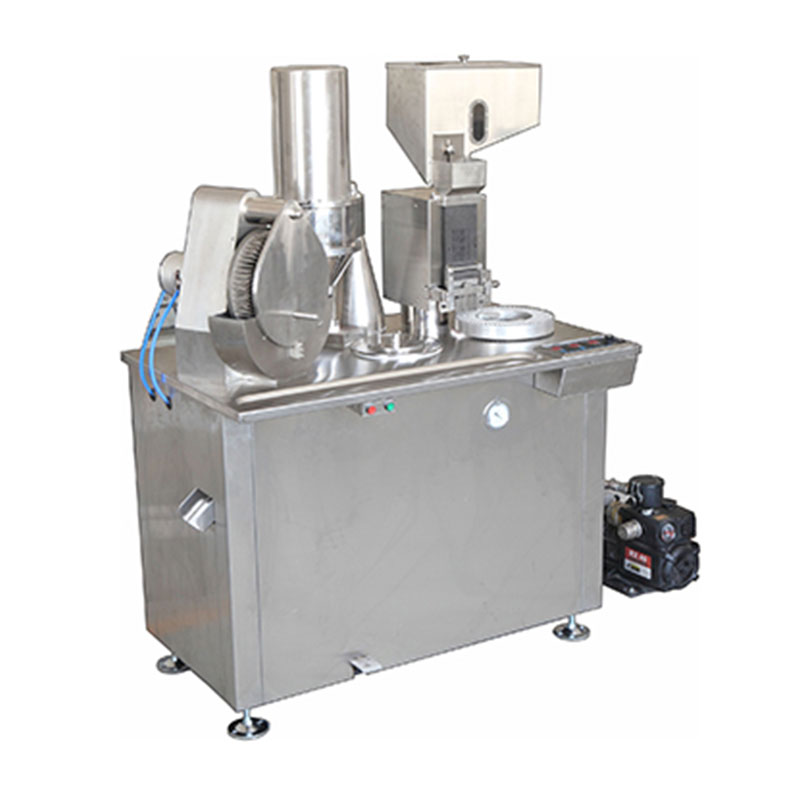
Where you do see real, integrated effort is when a manufacturer’s own brand aligns with sustainability. Looking at Suqian Kelaiya International Trading Co., LTD, their focus on new drug development alongside manufacturing hints at a vertical integration that could foster innovation. If they control more of the chain, from development to the capsule filling machine, they have more levers to pull. For instance, optimizing capsule wall thickness not just for machinability on a blister line, but for material use reduction. It’s these subtle, engineering-focused tweaks that often yield more genuine sustainability gains than splashy material swaps.
Beyond Gelatin: The (Limited) Role of Alternatives
Naturally, the conversation veers towards plant-based capsules—HPMC, pullulan. In an OEM/ODM context, they present a different challenge. They’re often touted as the sustainable alternative, but that’s a simplification. Their production has its own environmental load. The bigger issue is performance. They behave differently in high-speed filling machines. They have distinct moisture barrier properties. We tried to switch a client’s product from gelatin to HPMC for a ‘natural’ branding push. The filling machine at their contract site, calibrated for gelatin, jammed constantly. Downtime soared. The blister machine sealing parameters needed a complete overhaul. The project was technically successful but ate up all profit margin with troubleshooting and lost production time. The innovation wasn’t the capsule, but the process re-engineering, which most clients are unwilling to pay for upfront.
This is where a partner with broader machinery expertise, like Kelaiya Corp (you can find their specific tech specs at https://www.kelaiyacorp.com), has potential. If they’re developing both the capsule and the capsule filling machine, they could theoretically co-optimize both for alternative materials. That’s a long-term play, though. Most OEM/ODM work is reactive to client specs, not proactive R&D.
The failure of that HPMC project taught me that sustainable innovation in this field is rarely a drop-in replacement. It’s a system change. You can’t just swap the raw material and expect the same output. The entire production philosophy, from storage conditions to machine settings, needs to adapt. Few clients have the appetite for that level of disruption when their product launch timeline is fixed.
Waste Streams and the Unsexy Realities of Efficiency
Sustainability isn’t only about inputs; it’s about waste. In capsule manufacturing, you have gelatin trimmings, out-of-spec capsules, and packaging waste. The most effective sustainable innovations I’ve witnessed weren’t glamorous. One plant had a system to collect and re-melt gelatin trimmings from the capsule cutting process back into a secondary, non-pharma stream. It saved material costs and reduced waste haulage. That’s a genuine, bottom-line-friendly innovation. It didn’t make it into their marketing brochure.
Another area is the blister machine line. Optimizing the thermoforming process to use less PVC or switch to more mono-material structures (like pure aluminum blisters) reduces complex waste. But again, this depends on the client’s packaging spec. As an OEM/ODM, you can propose it, but you can’t dictate it. The power dynamic is clear: the brand holder calls the shots. Our role is often to educate them on the downstream consequences of their upstream choices, like how a certain foil laminate might be brilliant for barrier properties but a nightmare for recycling.
I remember proposing a switch to a simpler, recyclable blister material to a mid-sized supplement brand. Their response was that their market research showed consumers associated ‘crinkly’ PVC blisters with ‘freshness’ and ‘protection’. The sustainable option was perceived as cheap. That’s the market reality we’re up against.
The Certification Maze and Greenwashing Risks
This is where things get murky. Certifications like GMP are baseline; they’re about safety, not sustainability. When clients ask for ‘green’ capsules, they often mean certifications like Halal, Kosher, or non-GMO. These are important, but they’re attribute-based, not environmental impact-based. Obtaining them is a paperwork and audit trail exercise for the OEM/ODM manufacturer. It adds cost and complexity but doesn’t necessarily reduce the capsule’s carbon footprint one gram.
The real risk is greenwashing. I’ve seen capsules marketed as vegetable-derived when they’re just standard gelatin with a plant-based colorant. Or claims of biodegradable under ideal industrial composting conditions that don’t exist in most municipalities. As a professional in this space, your credibility hinges on pushing back on these misleading requests. Sometimes, the most sustainable innovation is saying, What you’re asking for doesn’t exist, but here’s what we can do that actually makes a difference. It’s a tough conversation that can lose a order.
Transparency is key. A manufacturer’s website, like Kelaiya’s, should clearly state what they can and cannot do. Can they provide full traceability on gelatin origin? Do they have audited data on water/energy use per million capsules? That’s the kind of concrete information that moves beyond buzzwords.
Conclusion: Incrementalism Over Revolution
So, are there sustainable innovations in OEM/ODM gelatin capsules? Yes, but they’re incremental, often invisible, and deeply entangled with cost and performance. The big leaps—like truly circular capsule systems or carbon-negative production—aren’t coming from the standard contract manufacturing model as it stands today. They require a fundamental rethinking of the value chain.
The most promising path I see is through integrated players who, like Suqian Kelaiya Corp, touch multiple points from development to machinery. They have the potential to design for sustainability from the inside out, rather than applying it as a surface coating. Innovation might be a new polymer blend that runs efficiently on standard machines, or a drying oven that uses 30% less energy.
For now, sustainability in this field is less about a single breakthrough and more about the grind of continuous improvement: a percent less waste here, a point more efficiency there. It’s unsexy, but it’s real. And for a professional on the ground, that’s where the actual work—and the genuine innovation—happens.