- Chinese
- French
- German
- Portuguese
- Spanish
- Russian
- Japanese
- Korean
- Arabic
- Irish
- Greek
- Turkish
- Italian
- Danish
- Romanian
- Indonesian
- Czech
- Afrikaans
- Swedish
- Polish
- Basque
- Catalan
- Esperanto
- Hindi
- Lao
- Albanian
- Amharic
- Armenian
- Azerbaijani
- Belarusian
- Bengali
- Bosnian
- Bulgarian
- Cebuano
- Chichewa
- Corsican
- Croatian
- Dutch
- Estonian
- Filipino
- Finnish
- Frisian
- Galician
- Georgian
- Gujarati
- Haitian
- Hausa
- Hawaiian
- Hebrew
- Hmong
- Hungarian
- Icelandic
- Igbo
- Javanese
- Kannada
- Kazakh
- Khmer
- Kurdish
- Kyrgyz
- Latin
- Latvian
- Lithuanian
- Luxembou..
- Macedonian
- Malagasy
- Malay
- Malayalam
- Maltese
- Maori
- Marathi
- Mongolian
- Burmese
- Nepali
- Norwegian
- Pashto
- Persian
- Punjabi
- Serbian
- Sesotho
- Sinhala
- Slovak
- Slovenian
- Somali
- Samoan
- Scots Gaelic
- Shona
- Sindhi
- Sundanese
- Swahili
- Tajik
- Tamil
- Telugu
- Thai
- Ukrainian
- Urdu
- Uzbek
- Vietnamese
- Welsh
- Xhosa
- Yiddish
- Yoruba
- Zulu
- Kinyarwanda
- Tatar
- Oriya
- Turkmen
- Uyghur



How do vegetable capsules sizes impact sustainability?
2026-01-03
Understanding the impact of vegetable capsules sizes on sustainability is more nuanced than it might initially appear. There’s a common assumption that smaller is always better when it comes to sustainability. But it’s not that simple. Analyzing the ecological footprint of different capsule sizes involves a web of factors including material usage, transportation efficiency, and consumer needs.
Material Consumption and Efficiency
At first glance, it seems obvious that smaller capsules would consume fewer raw materials, leading to greater sustainability. However, not all capsules fulfill the same requirements. Smaller sizes might result in increased packaging or more capsules to achieve the desired dosage, thereby negating the potential material savings. My experience tells me that for companies like SUQIAN KELAIYA INTERNATIONAL TRADING CO., LTD, which specialize in empty capsules, finding that perfect balance between size and material efficiency is an ongoing challenge.
An example from the field: when using smaller capsules in high-demand products, the need for additional packaging materials can spike, inadvertently increasing the product’s overall footprint. Moreover, the manufacturing complexities involved in producing smaller capsules might offset any material savings.
I recall a case where we experimented with downscaling capsule size for an herbal supplement. The initial thought was to reduce material costs and enhance sustainability. However, consumers found the increased number to be a nuisance, leading to a backlash and more waste due to returns and repackaging efforts. Lesson learned: sustainability doesn’t purely hinge on capsule size.
Transportation and Environmental Impact
One might neglect how capsule sizes affect transportation efficiency. Larger capsules, if strategically used, often mean more product per shipment unit, potentially reducing the frequency and hence the carbon footprint associated with transportation.
Once, in the process of logistical planning, it became apparent that the sheer volume of smaller capsules was impacting shipping costs significantly. The extra trips added nothing but increased emissions. With well-planned logistics, using fewer larger capsules can lower transportation emissions—a detail often missed in casual sustainability talks.
This lesson resonates with companies like Suqian kelaiya corp., where transportation from manufacturing sites in Zhejiang and Jiangsu provinces to various markets necessitates a careful calculation of shipment density against economic and ecological metrics. It is indeed a complex equation.

Consumer Preferences and Market Trends
The market’s pulse plays an instrumental role. Consumers often dictate the sustainability narrative, whether knowingly or not. I’ve seen trends where customers prefer smaller capsules for perceived ease of swallowing, yet the same consumers voice concerns over environmental impacts—a dilemma for producers.
Suqian kelaiya’s sales feedback has frequently indicated a consumer inclination towards smaller doses despite sustainability concerns. This brings about fascinating discussions within sales and development teams regarding adapting manufacturing practices to retain customer trust while advancing environmentally friendly practices.
In practice, this has meant keeping an ear to the ground concerning consumer preferences but also investing in educating consumers on the holistic benefits of choosing sustainable options, even if they appear counterintuitive.
Innovative Solutions and Technology
Technological advancements are a beacon of hope in addressing the size-sustainability conundrum. Companies are exploring new materials and capsule structures that could potentially minimize environmental footprints without compromising on quality or consumer convenience.
I recall a collaborative project exploring biodegradable materials which, while initially more costly, promised long-term sustainability gains. Although not yet mainstream, breakthroughs in this space could revolutionize our approach to capsule manufacturing.
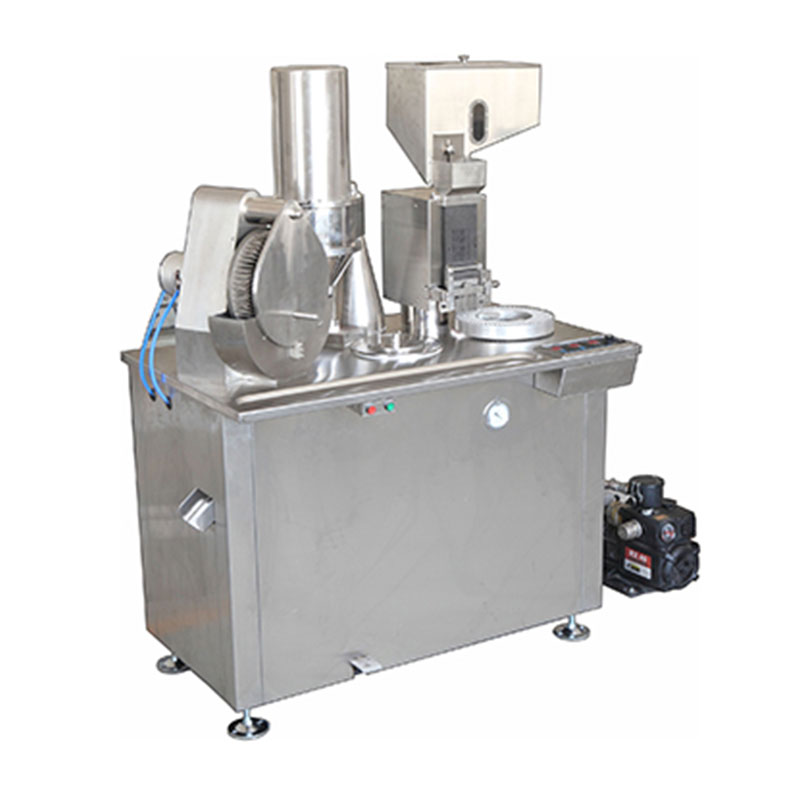
For entities like Suqian kelaiya, leveraging technology not only in capsule production but also in manufacturing processes like capsule filling and blister machines supports their commitment to sustainable practice. It serves as a reminder that innovation holds the key to bridging the size-sustainability divide.

Balancing Economic and Ecological Goals
The journey toward sustainable manufacturing is fraught with balancing acts. The economics of production—cost pressures, consumer pricing—often clash with ecological goals. Yet, companies like Suqian kelaiya find themselves at the forefront, navigating these intricacies.
It’s not just about making smaller or fewer vegetable capsules; it’s about integrating sustainability into the entire lifecycle—from selection of raw materials to end-of-life recycling processes. The question remains not what the perfect capsule size is but rather how each decision impacts the wider ecological system.
As someone entrenched in this industry, I see the path not so much as linear but as an evolving dialogue between technology, market forces, and environmental responsibilities. With ongoing exploration and innovation, we edge closer to solutions that satisfy all stakeholders, echoing the broader sustainability narrative one capsule size at a time.