- English
- Chinese
- French
- German
- Portuguese
- Spanish
- Russian
- Japanese
- Korean
- Arabic
- Irish
- Greek
- Turkish
- Italian
- Danish
- Romanian
- Indonesian
- Czech
- Afrikaans
- Swedish
- Polish
- Basque
- Catalan
- Esperanto
- Hindi
- Lao
- Albanian
- Amharic
- Armenian
- Azerbaijani
- Belarusian
- Bengali
- Bosnian
- Bulgarian
- Cebuano
- Chichewa
- Corsican
- Croatian
- Dutch
- Estonian
- Filipino
- Finnish
- Frisian
- Galician
- Georgian
- Gujarati
- Haitian
- Hausa
- Hawaiian
- Hebrew
- Hmong
- Hungarian
- Icelandic
- Igbo
- Javanese
- Kannada
- Kazakh
- Khmer
- Kurdish
- Kyrgyz
- Latin
- Latvian
- Lithuanian
- Luxembou..
- Macedonian
- Malagasy
- Malay
- Malayalam
- Maltese
- Maori
- Marathi
- Mongolian
- Burmese
- Nepali
- Norwegian
- Pashto
- Persian
- Punjabi
- Serbian
- Sesotho
- Sinhala
- Slovak
- Slovenian
- Somali
- Scots Gaelic
- Shona
- Sindhi
- Sundanese
- Swahili
- Tajik
- Tamil
- Telugu
- Thai
- Ukrainian
- Urdu
- Uzbek
- Vietnamese
- Welsh
- Xhosa
- Yiddish
- Yoruba
- Zulu
- Kinyarwanda
- Tatar
- Oriya
- Turkmen
- Uyghur



How do size 0 capsules impact eco-friendly packaging?
2025-12-20
When diving into the realm of eco-friendly packaging, the size 0 capsule often stands out for its balance between usability and environmental impact. Surprisingly, many misunderstand its role, often assuming smaller means lesser impact. Yet, it’s a bit more nuanced.

Understanding Size 0 Capsules
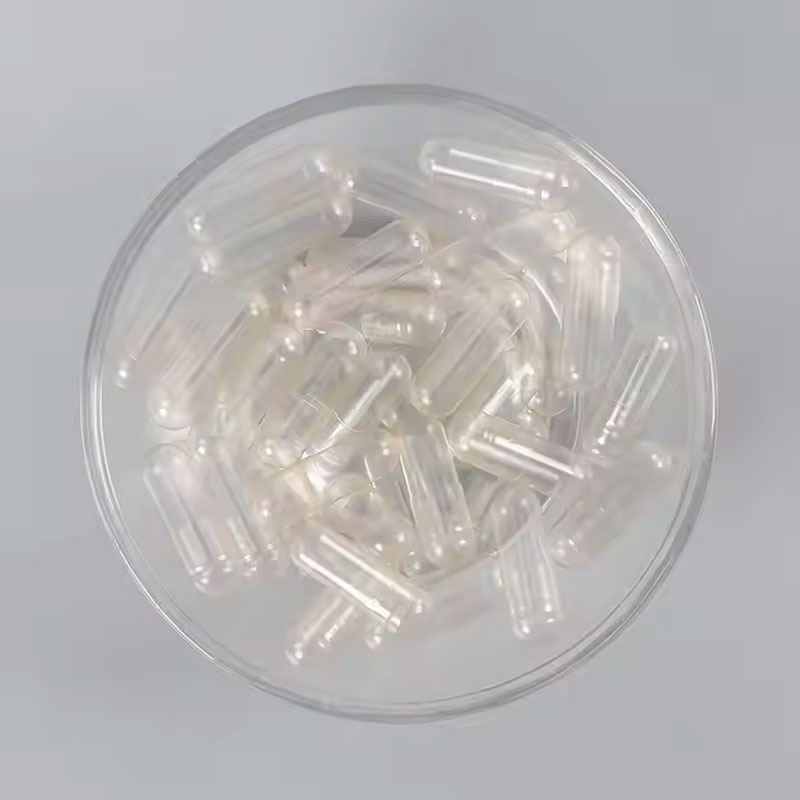
The first step is to grasp what a size 0 capsule signifies in the capsule world. It’s a common choice, balancing a generous payload with ease of swallowing for consumers. Typically, when you opt for a capsule size like this, you are also factoring in the material used—often gelatin or, more sustainably, HPMC (Hydroxypropyl Methylcellulose).
From a manufacturing perspective, like at Suqian Kelaiya International Trading Co., Ltd, which is deeply involved in new drug development across two sites in Zhejiang and Jiangsu, the sustainable choice increasingly points to HPMC. The material not only aligns with consumer preferences for vegetarian options but also paves the way for packaging considerations that are more aligned with environmental goals.
Consider the implications: producing capsules that are environmentally friendly starts at the choice of material but extends much further into how they are packaged. Size 0 capsules, due to their intermediate size, often dictate the volume and nature of packaging.
Packaging Impacts
Now, let’s dissect the packaging itself. When dealing with size 0 capsules at Suqian Kelaiya, considerations include not just the direct material of the capsules but the bulk and retail packaging. The eco-friendliness of packaging depends greatly on materials like recyclable cartons or biodegradable blister packs. It’s a dance of balancing protection with environmental consciousness.
One practical instance that comes to mind is the potential shift from plastic to paper-based blister packs. Yet, it’s not without its challenges—the integrity and shelf-life of the capsules can be compromised if not executed correctly. Therefore, advanced packaging techniques are frequently explored, such as those incorporating moisture barriers.
Additionally, logistics play a critical role. Efficient packing reduces volume and weight, thereby minimizing transportation emissions. Understanding these nuances can make or break the so-called eco-friendly label that so many products strive for.
Real-World Challenges
The quest for an eco-friendly solution isn’t always smooth. For instance, there have been trials where a shift to a fully biodegradable capsule packaging resulted in compromised capsule integrity during humidity fluctuations. The learning curve, albeit steep, guides the industry toward solutions that must bridge the gap between sustainability and practicality.
Manufacturers like Suqian Kelaiya are constantly testing new materials, iterating on designs, and balancing costs with environmental benefits. It’s a method of trial and error—incorporating not only consumer feedback but also technical feasibility. It highlights that achieving sustainable packaging is no mere checkbox but an ongoing journey.
Then there’s the issue of consumer perception—educating users about why a specific packaging choice matters, beyond the visible elements, plays heavily into the packaging’s success. Sustainability isn’t only in the hands of the manufacturers but equally in how consumers value eco-friendly initiatives.
Future Directions
So, where does the journey go next for size 0 capsules in eco-friendly packaging at a company like Suqian Kelaiya? There’s exploration into smarter logistics, with AI-driven packing strategies to minimize waste further. There’s also hope in partnerships with material scientists to discover or invent packaging that is not only biodegradable but improves the shelf-life and reliability of the capsule.
One promising area is integrating materials that naturally decompose yet are robust enough to handle international shipping challenges. It’s a vision shared by many, aspiring to push the boundaries of what’s currently possible. Partnerships with universities and research entities are keys to unlocking these innovations.
As the industry evolves, these solutions will likely become more refined, achieving both practicality and sustainability. It’s a space ripe with innovation and change, and size 0 capsules are merely a small piece yet a significant one in this larger puzzle.
Conclusion
To conclude, size 0 capsules play a surprisingly intricate role in eco-friendly packaging. While their size is standardized, the consideration they demand is anything but. For companies like Suqian Kelaiya, this is an area of active exploration and innovation, balancing consumer demand with environmental responsibilities. It’s about crafting a narrative that’s sound, practical, and vitally sustainable—something every player in the market is still learning to perfect.
The path forward involves not only technology and design innovations but also an ongoing commitment to sustainability that goes beyond the capsule and into every aspect of its packaging. It’s a dynamic domain, and one can only watch with interest as the solutions of tomorrow unfold.