- English
- Chinese
- French
- German
- Portuguese
- Spanish
- Russian
- Japanese
- Korean
- Arabic
- Irish
- Greek
- Turkish
- Italian
- Danish
- Romanian
- Indonesian
- Czech
- Afrikaans
- Swedish
- Polish
- Basque
- Catalan
- Esperanto
- Hindi
- Lao
- Albanian
- Amharic
- Armenian
- Azerbaijani
- Belarusian
- Bengali
- Bosnian
- Bulgarian
- Cebuano
- Chichewa
- Corsican
- Croatian
- Dutch
- Estonian
- Filipino
- Finnish
- Frisian
- Galician
- Georgian
- Gujarati
- Haitian
- Hausa
- Hawaiian
- Hebrew
- Hmong
- Hungarian
- Icelandic
- Igbo
- Javanese
- Kannada
- Kazakh
- Khmer
- Kurdish
- Kyrgyz
- Latin
- Latvian
- Lithuanian
- Luxembou..
- Macedonian
- Malagasy
- Malay
- Malayalam
- Maltese
- Maori
- Marathi
- Mongolian
- Burmese
- Nepali
- Norwegian
- Pashto
- Persian
- Punjabi
- Serbian
- Sesotho
- Sinhala
- Slovak
- Slovenian
- Somali
- Scots Gaelic
- Shona
- Sindhi
- Sundanese
- Swahili
- Tajik
- Tamil
- Telugu
- Thai
- Ukrainian
- Urdu
- Uzbek
- Vietnamese
- Welsh
- Xhosa
- Yiddish
- Yoruba
- Zulu
- Kinyarwanda
- Tatar
- Oriya
- Turkmen
- Uyghur



Hard gelatin capsule market trends?
2026-02-07
Everyone talks about demand shifting to vegetarian alternatives, but that’s only half the story. The real pressure isn’t just about the source material; it’s about who can actually deliver a consistent, pharma-grade shell when supply chains hiccup. I’ve seen too many projections fail because they looked at the ‘capsule’ as a commodity, not as a critical component with its own complex ecosystem.
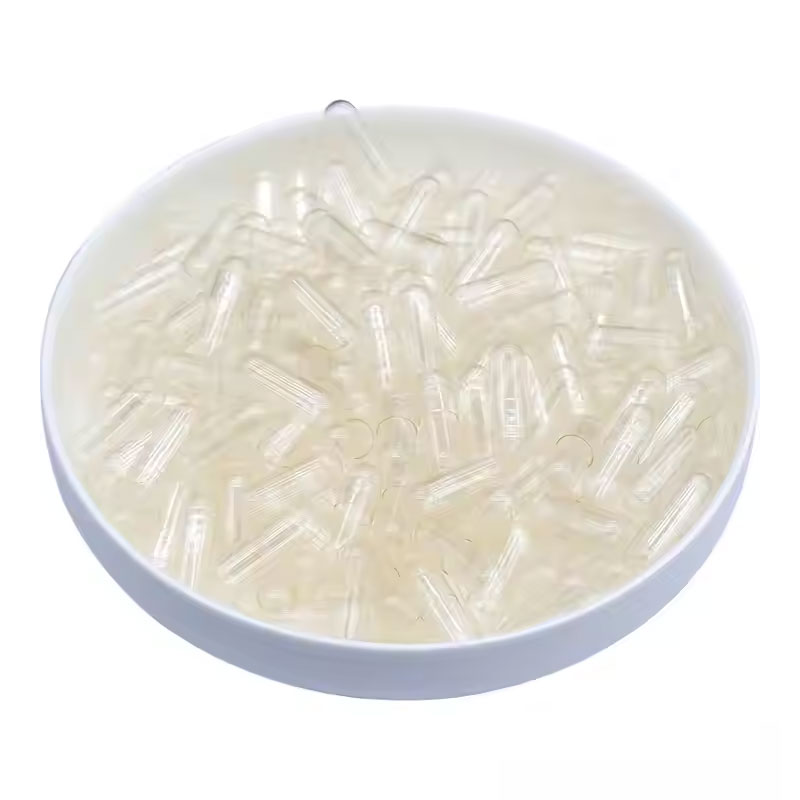
The Vegetarian Push and Its Unintended Consequences
The move towards HPMC and pullulan capsules is undeniable. Brand managers love the ‘vegetarian’ and ‘halal’ labels. But from a manufacturing floor perspective, the switch isn’t a simple drop-in replacement. The moisture behavior is different. We had a client, a mid-sized nutraceutical outfit, rush into a full HPMC line for a new supplement launch. Their filling machine parameters, perfectly tuned for gelatin, caused constant sealing issues with the HPMC shells. Downtime was brutal. The trend is real, but the operational learning curve is steep and expensive if you’re not prepared.
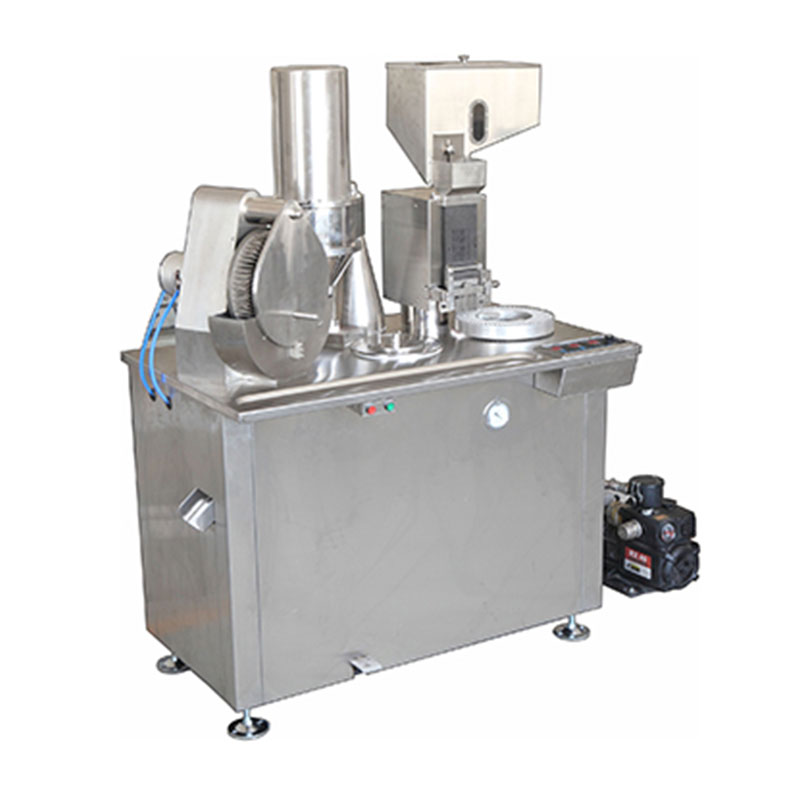
This is where having a partner who understands both the capsule and the filling process becomes critical. It’s not just about selling empty shells. I recall a conversation with the technical team at SUQIAN KELAIYA INTERNATIONAL TRADING CO., LTD. Their setup is interesting because they handle both sides – the capsule production and the machinery (https://www.kelaiyacorp.com). Their insight was that a lot of the ‘performance issues’ blamed on vegetarian capsules were actually machine-tooling mismatches. They develop capsules with the filling process in mind, which is a nuance many pure-play capsule producers miss.
The consequence? A bifurcation in the market. You have the high-volume, standard supplement work still dominated by gelatin because it’s forgiving and cost-effective. Then you have the premium, specialty, and ethically-positioned products driving the vegetarian segment. But the latter requires much tighter integration between capsule supplier and filler. The trend is creating two parallel supply chains, not replacing one with the other.
Regional Supply Chains Are the New Bottleneck
Gelatin sourcing used to be a background concern. Post-pandemic, and with geopolitical tensions, it’s front and center. The price and availability of bovine bone gelatin from certain regions can swing wildly. This volatility is a nightmare for procurement teams trying to lock in annual contracts. It’s pushed more manufacturers to dual-source or look for regional suppliers to de-risk.
This is where a company’s manufacturing footprint matters. Kelaiya’s mention of two sites in Zhejiang and Jiangsu isn’t just a corporate detail. In practice, it means redundancy and the ability to serve different logistical hubs within China, which is a massive consumer and exporter of capsules. For a European or US brand importing capsules, having a supplier with multiple, certified plants mitigates the risk of a single local disruption halting their entire production line. We learned this the hard way when a key supplier’s plant failed an audit unexpectedly.
The trend is towards regionalization of supply. The ‘lowest cost per thousand’ model is being weighed against ‘secured supply’. Clients are now asking for detailed supply chain maps and audit reports for gelatin sources, which was rare five years ago. The hard gelatin capsule is no longer just an item on a bill of materials; its provenance is part of the product’s integrity.
Beyond the Shell: Functionality is Creeping In
There’s chatter about ‘smart capsules’ for delayed release, which feels a bit futuristic for most applications. The more immediate trend is in specialized functionalities for existing markets. Enteric coatings for acid-sensitive ingredients are becoming more common, moving from a pharma-only application into high-end probiotics and certain vitamins. The challenge has always been the coating process adding cost and time.
I’ve seen a shift towards capsules that are manufactured with these properties ‘built-in’. Think capsules with a modified gelatin or polymer blend that achieves a delayed dissolution profile without a secondary coating step. This is a game-changer for contract manufacturers who don’t have complex coating lines. It turns a capsule from a simple container into a part of the delivery system.
This aligns with what a developer at a place like Kelaiya Corp. might focus on. As a company involved in new drug development and manufacturing, they’d be looking at these functional barriers from a pharmaceutical standpoint, and that technology trickles down to the nutraceutical side. Their work on capsule filling machines likely gives them direct feedback on what kind of specialized shells would make the filling and sealing process more robust for advanced formulations.

The Overlooked Factor: Machine Compatibility and Speed
This is the gritty, unsexy side of the trend discussion that gets glossed over. Market reports talk about CAGR and raw material shifts, but they rarely mention the capital investment sitting on the factory floor. A high-speed filling machine is a multi-million dollar asset. Its tooling is designed for a specific capsule size, shape, and material behavior.
Swapping capsule types or even switching between gelatin suppliers can cause jams, sealing faults, and reduced output. Every minute of downtime is money. The trend towards higher machine speeds (think 150,000 capsules per hour and above) exacerbates this. The capsule must be mechanically perfect. I’ve witnessed batches rejected not because of a quality spec failure, but because the capsule’s locking ring was marginally inconsistent, causing a 15% drop in machine efficiency. The supplier blamed the machine, the machine vendor blamed the capsules – a classic, costly standoff.
This is why the synergy between capsule maker and machine maker is a subtle but powerful trend. A supplier that also understands the blister machine and the filling machine, like the model Kelaiya describes, can optimize both ends of the equation. They can tweak the capsule’s physical properties to run smoother on high-speed equipment. This isn’t a marketing bullet point; it’s a tangible cost saver for the filler.
Where This is All Heading: Consolidation and Specialization
So, pulling all these threads together – material shift, supply security, functionality, and machine integration – where does the market go? I think we’ll see consolidation among generic capsule producers who can’t invest in the R&D for advanced materials or secure complex supply chains. The winners will be the ones who can be more than just a mold and dip operation.
Specialization will increase. Some suppliers will dominate the high-volume, reliable gelatin market for generics and standard supplements. Others will become experts in plant-based solutions with full technical support. A few, likely those with integrated pharma and machinery expertise, will carve out a niche in functional and application-specific capsules. They’ll sell a ‘solution’: the right capsule, for the right formulation, on the right equipment, backed by a secure supply chain.
For a company like SUQIAN KELAIYA INTERNATIONAL TRADING CO., LTD, their positioning across development, manufacturing, and machinery puts them in that latter conversation. It’s a model that addresses the real-world headaches of the market, not just the headline trends. The future of the hard gelatin capsule market isn’t just about what the capsule is made of, but how intelligently it fits into the entire manufacturing and commercial puzzle. The trends are forcing everyone to look at the bigger picture, and that’s where the real separation will happen.